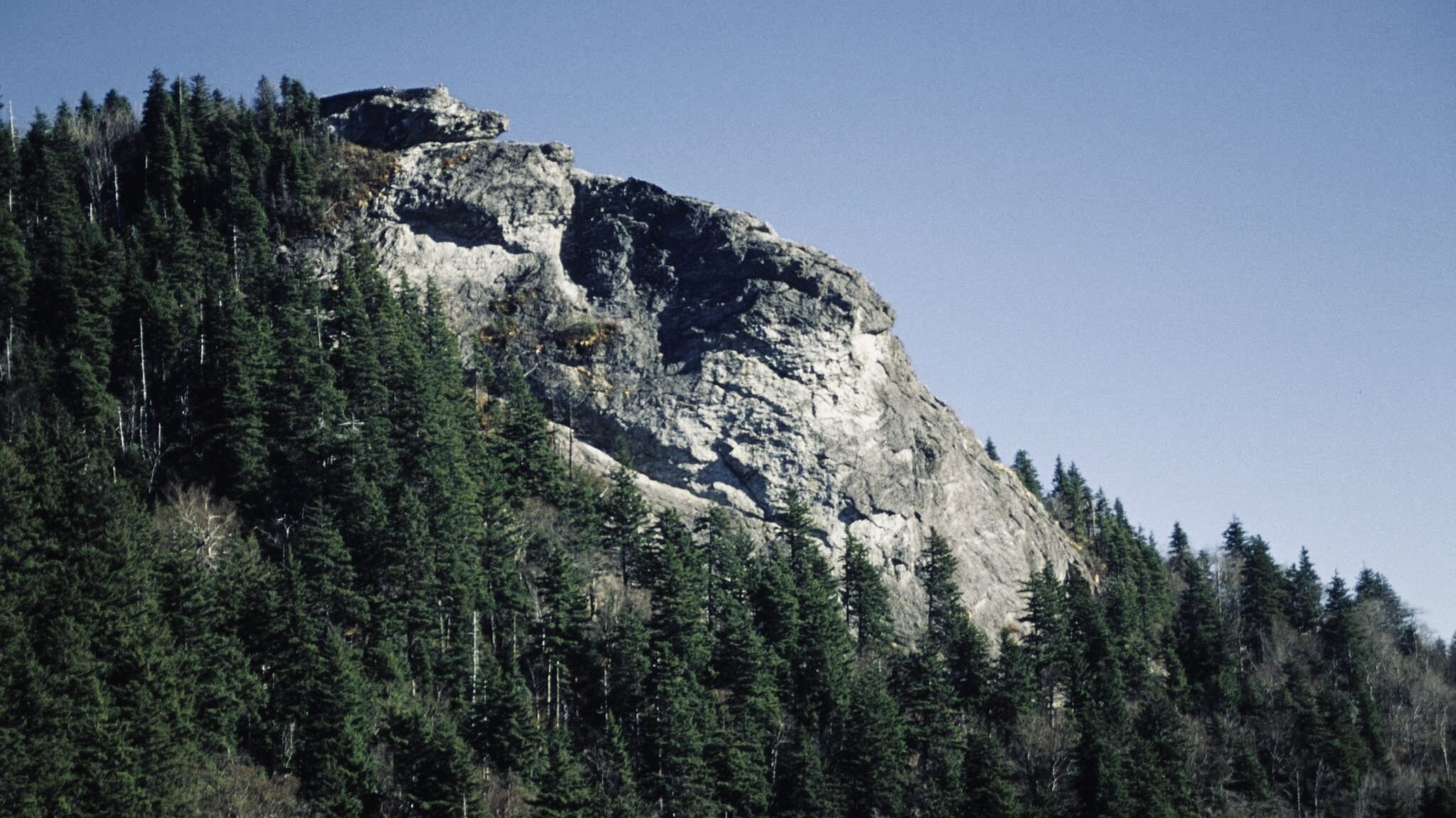
High along the spine of the southern Appalachian Mountains, a jagged stone peak rises above the forests of western North Carolina. This is Devil’s Courthouse, a dark, rocky summit and one of the most recognizable landmarks in the Blue Ridge Mountains.
Today locals and tourists know the summit for its sweeping views and short but steep hiking trail. But long before it became a scenic stop for travelers, the mountain inspired stories of dark forces within the rock.
The Trail to the Summit
The hike to the top of Devil’s Courthouse is short, measuring only about half a mile each way. But what it lacks in length it makes up for in steepness.
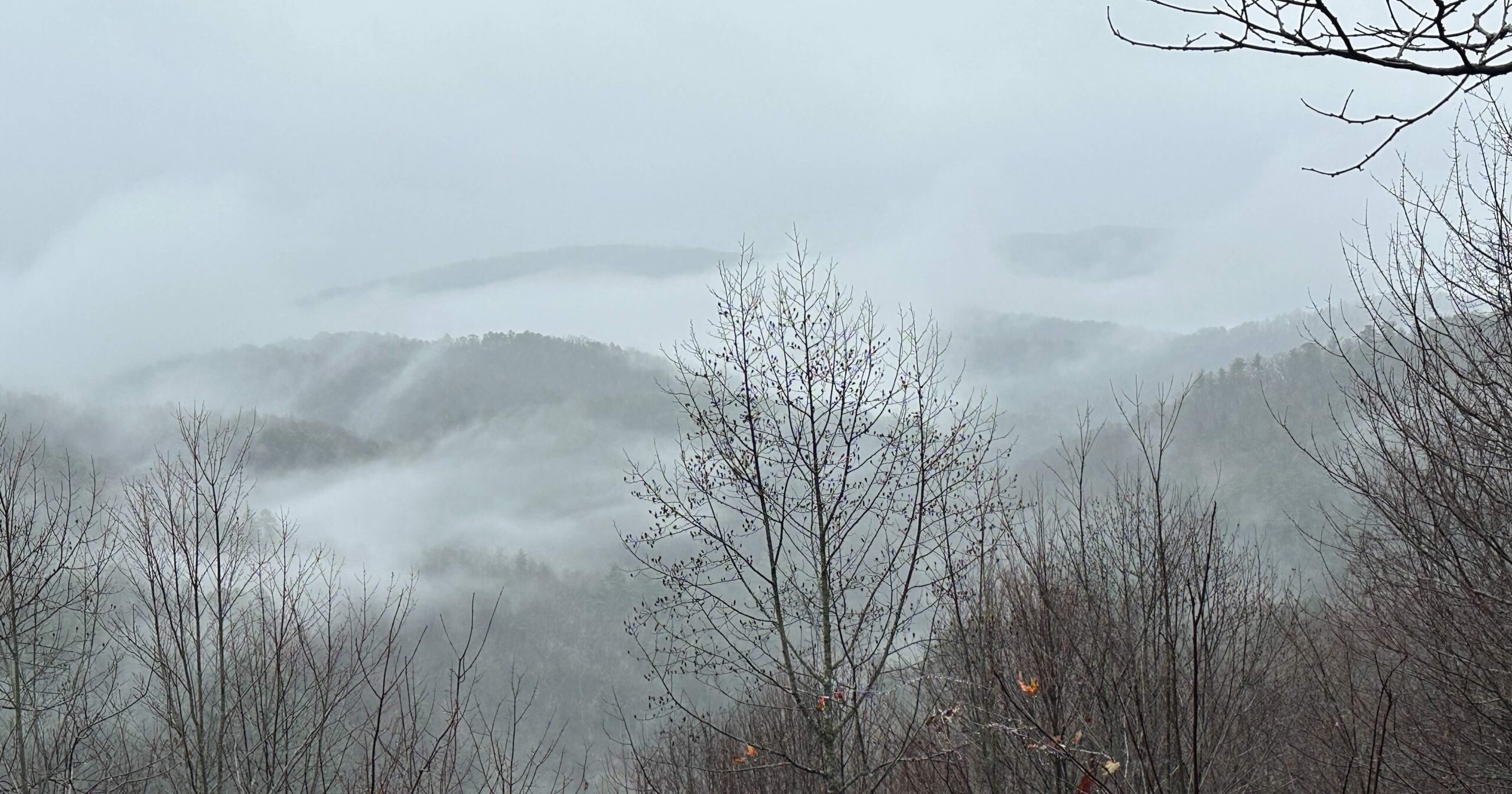
The paved trail climbs steadily through spruce and fir trees that cling to the mountainside. As hikers ascend, the forest gradually thins, replaced by exposed rock and low mountain shrubs shaped by wind and weather. On cool mornings, fog often rolls up from the valleys and wraps the trail in shifting mist.


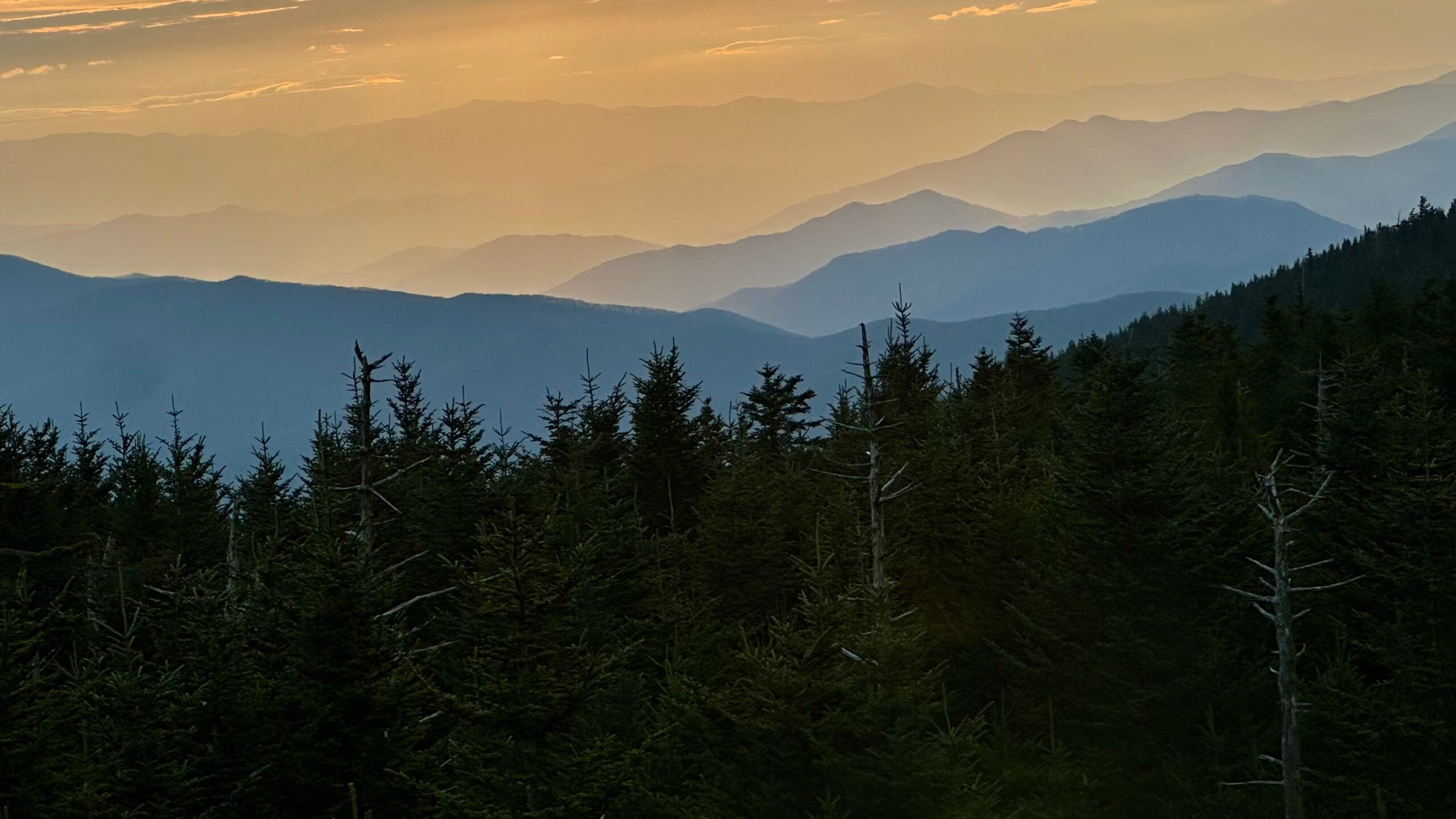
From here, the view stretches across several layers of the southern Appalachians. On clear days, hikers can see deep into the forests of Pisgah National Forest and toward the distant peaks near Great Smoky Mountains National Park.
The views are breathtaking. But it’s the rock below that gives the place its eerie name and reputation.
A Mountain with a Dark Name
No one’s quite sure where the name “Devil’s Courthouse” came from, but it was likely early settlers in the Appalachian region who often gave dramatic names to unusual landscapes.
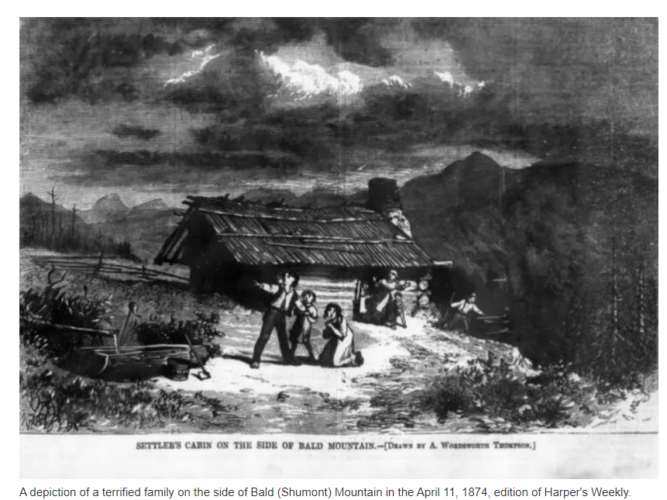
The peak itself resembles a fortress of stone, with sheer cliffs and a cave-like hollow beneath the summit. Early travelers said the formation looked like a natural courtroom carved into the mountain. Local folklore soon filled in the rest of the story.
According to one legend, the cave below the summit is where the Devil gathers spirits and demons to hold court and pass judgment over the souls of the wicked. Storm winds whipping around the cliffs were said to be the voices of those condemned.
While the story carries a distinctly European tone, there are much older beliefs connected to the mountain.
Tsul’kalu: A Powerful Giant of Cherokee Legend
Long before settlers arrived, the Cherokee people lived throughout this region of the Blue Ridge.
In Cherokee tradition, the mountain was known as Tsul’kalu’s, or Judakulla’s, courthouse, referring to a powerful slant-eyed giant named who appears in several Cherokee legends. Tsul’kalu was said to be a supernatural being who lived in the mountains and possessed great strength and wisdom.
Some stories describe him as a protector of animals and forests. Others portray him as a judge-like figure who watched over the land from the high peaks.
Some believe Devil’s Courthouse may have been associated with Tsul’kalu in Cherokee storytelling, though the exact details have been blurred by time and translation.


The Cave Beneath Devil’s Courthouse
One of the most persistent elements of the legend involves the cave located beneath the summit cliffs.
From the overlook above, the opening isn’t easy to see, but local hikers and climbers know it exists. The cave extends into the mountain beneath the rock face. Over the years, rumors grew around the dark hollow.
Some say strange echoes travel from inside the cave on windy nights. Others claim the temperature drops suddenly near the opening even in summer. There are also stories of hikers hearing distant voices while standing on the summit after dusk.
Most visitors dismiss these tales as imagination amplified by wind and stone. Still, the cave adds a sense of mystery to a place that already feels ancient and isolated.
A Modern Stop with Ancient Secrets
Today, Devil’s Courthouse is one of the most popular short hikes along the Blue Ridge Parkway.
Travelers stop here for panoramic views of the surrounding mountains, spectacular sunsets, and stellar stargazing away from city lights
On summer afternoons the trail is busy with families, photographers, and hikers making the quick climb to the overlook.
But in the quiet moments—when clouds drift across the peaks and the wind rushes over the stone—it’s easy to understand why people have whispered about this place for centuries.