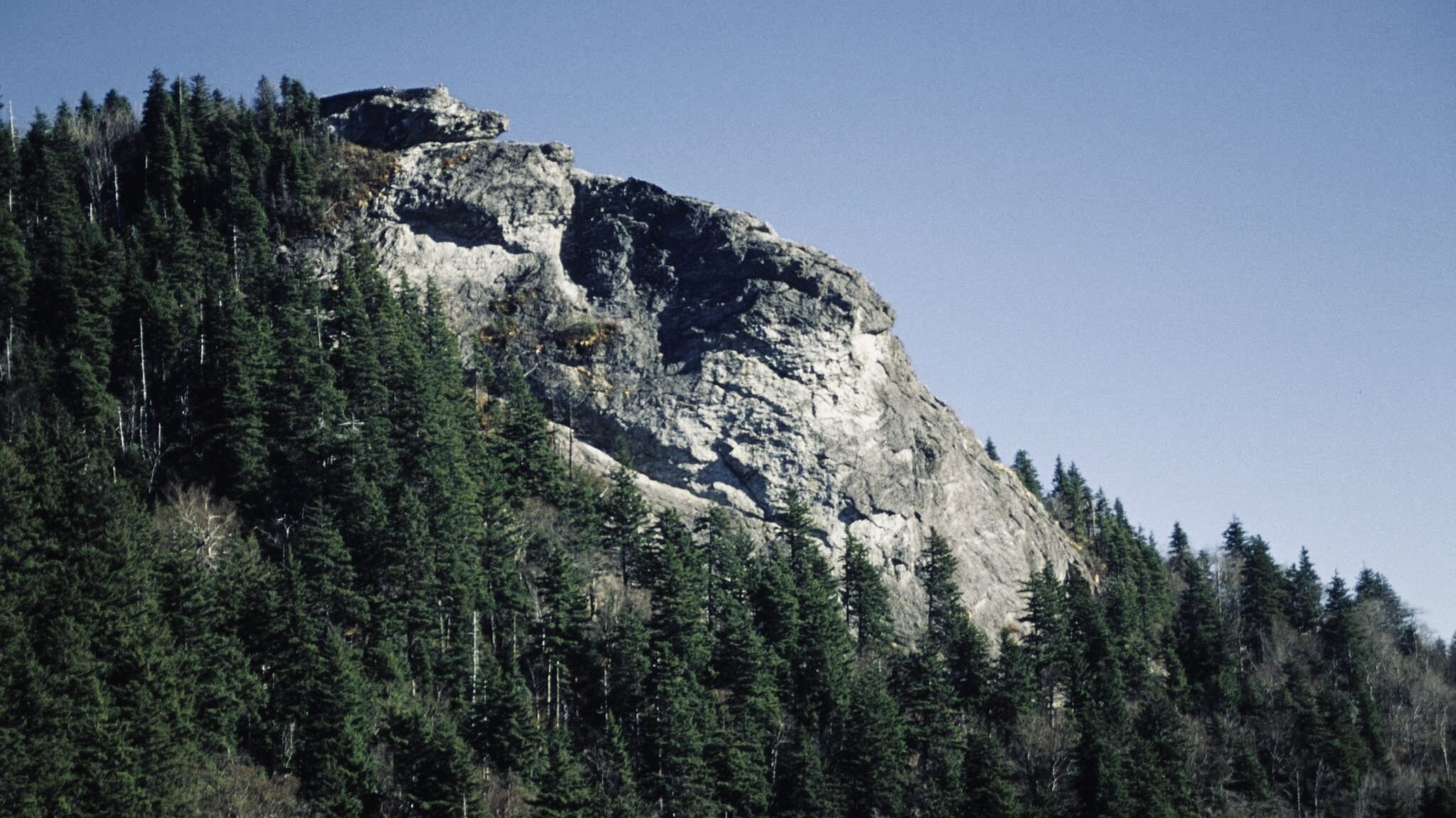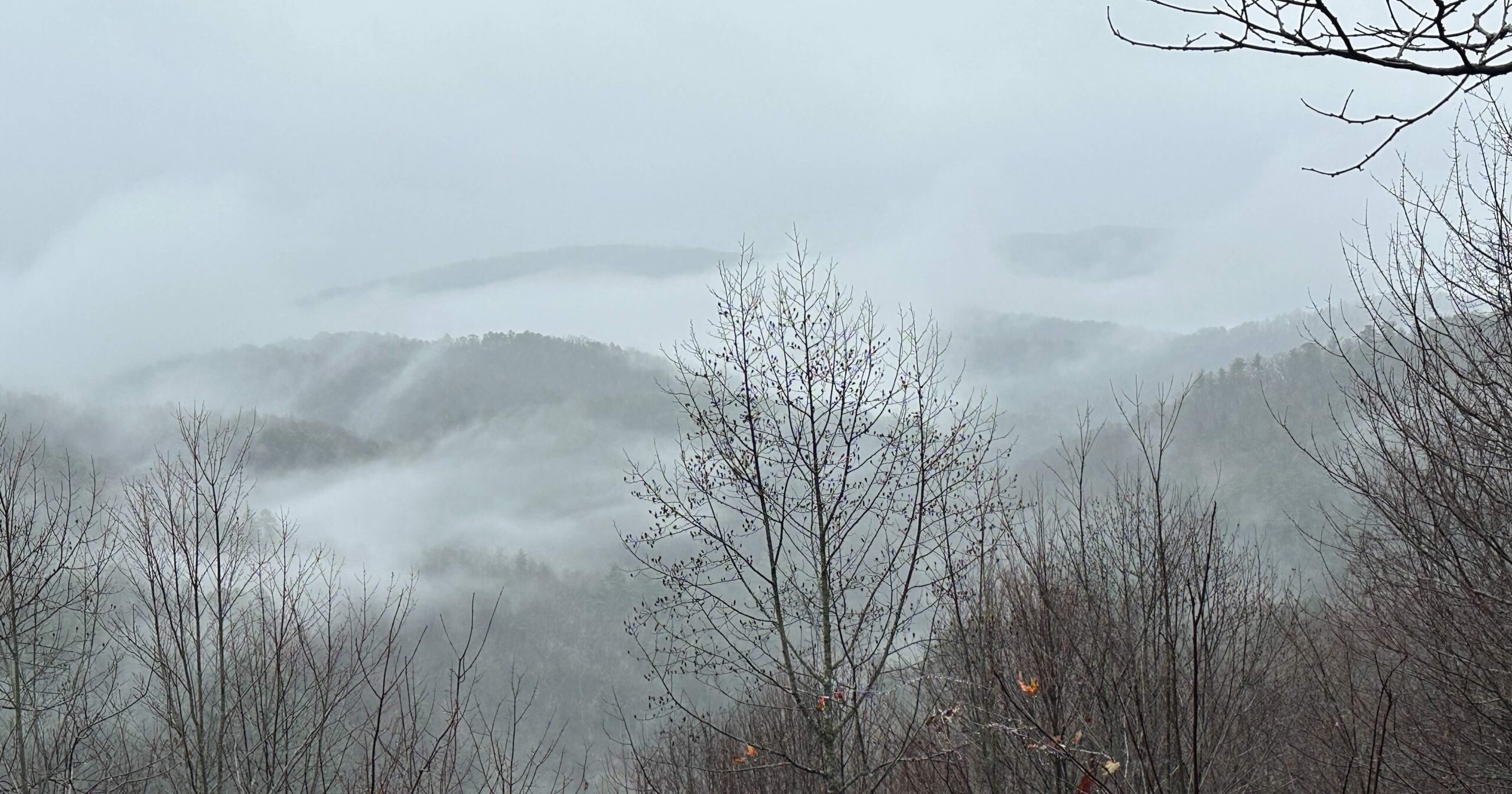
Today, Roan Mountain is best known as one of the most scenic stretches of the Appalachian Trail. Hikers cross wide grassy balds, watch fog drift across the ridges, and look out over the mountains of North Carolina and Tennessee. But in the late 1800s, visitors came to Roan Mountain for something else.
A Heavenly Resort
In 1885, Civil War general and industrialist John T. Wilder opened the Cloudland Hotel near the summit of Roan Mountain. The hotel stood more than 6,000 feet above sea level, making it one of the highest resorts in the eastern United States.
Reaching the hotel wasn’t easy. Visitors traveled by train to the small community of Roan Mountain, then continued up a rough mountain road by carriage to the summit.
The hotel quickly became a summer retreat for wealthy travelers escaping the heat and disease of southern cities. Advertisements promoted Roan Mountain’s cool air and expansive views. The guest register eventually included names from prominent families, including the Vanderbilts and Astors.

The hotel itself sat directly on the North Carolina–Tennessee border. According to historical accounts, a painted line ran through the dining room marking the state boundary. Because alcohol was prohibited in North Carolina but legal in Tennessee, the hotel could only serve drinks on the Tennessee side of the room.
Cloudland was a curious place even by the standards of the era. Yet many guests remembered the mountain for something stranger than the hotel’s unusual location. They remembered the sounds.
The Ghost Choir of Roan Mountain
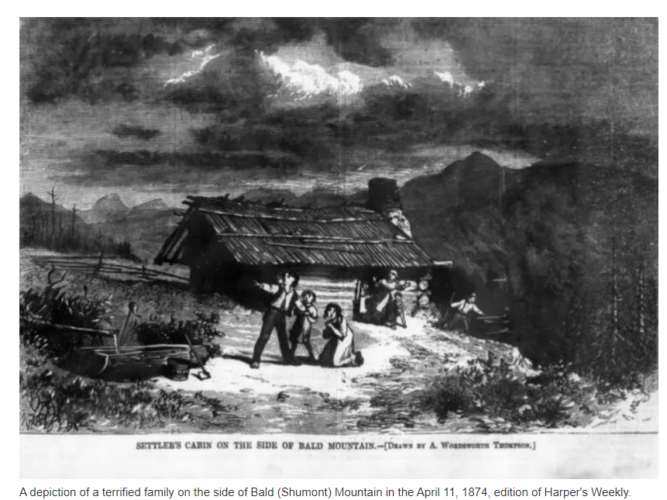
Throughout the late 19th century, visitors and residents reported hearing mysterious sounds drifting across the summit. Newspapers eventually gave the phenomenon a name: “The Ghostly Choir of Roan Mountain.” Some writers called it “Mountain Music.”
Descriptions varied widely. Some people said the sound resembled a distant choir singing somewhere beyond the horizon. Others described shrieks, wails, or a low humming tone that seemed to rise and fall with the wind.
One observer compared the sound to “the incessant, continuous snap of two glass jars being tapped together.” Another said it resembled “the humming of thousands of bees.”
Guests at the Cloudland Hotel sometimes heard the strange noise late at night, especially after storms. When strong winds swept across the summit, the hotel itself swayed and creaked. One guest said if felt “like being on a ship at sea.”
Listeners could never identify the source of the strange sounds.

The Unusual Landscape of the Roan Highlands
Part of the mystery may lie in the landscape itself.
The Roan Highlands have large treeless summits, or grassy balds. These open mountaintops stretch for miles along the North Carolina–Tennessee border and are unusual in the southern Appalachians where forest covers most of the landscape.
Scientists still debate why these balds exist. Some researchers believe ancient grazing or early human clearing are to blame. Others suggest climate conditions or periodic fires. Whatever the cause, the result is a high, open plateau where unobstructed wind can sweep across the ridge.

Early visitors often remarked on the mountain’s powerful winds. One surveyor in the late 1700s wrote of gusts so strong they seemed to spin clouds across the summit. In such conditions, sound can travel in strange ways. But that didn’t stop people from searching for more unusual explanations.
Early Attempts to Explain the Strange Sounds in the Sky
By the late 1800s, some observers began investigating the phenomenon more seriously.
A scientist named Henry E. Colton studied the reports and suggested that unusual air currents on the mountain could be the source of the sounds. According to Colton, winds rising from the valleys of western North Carolina and eastern Tennessee might collide above the Roan Highlands. He proposed that friction between air masses of different temperatures might generate electrical activity in the atmosphere. That electrical energy could produce snapping or humming noises like the sounds sometimes heard during auroral displays.
Others believed the explanation was simpler. They suggested the sounds came from wind rushing across the open balds, amplified by the shape of the mountain and the surrounding ridges. Even those who favored natural explanations admitted the phenomenon was unsettling to hear in person.
Roan Mountain isn’t only place in western North Carolina where people have heard unusual atmospheric sounds. In 1806, residents of Chimney Rock reported hearing battle sounds in the sky and saw a host of beings in brilliant white clothing soaring through the air.
Many of these stories likely stemmed from natural phenomena that were poorly understood at the time. But taken together, they reveal how frequently Appalachian travelers encountered unusual conditions in the high mountains.
The End of the Cloudland Hotel
Operating a luxury hotel on a remote mountaintop proved difficult. By 1910, the Cloudland Hotel was abandoned. The building quickly fell into disrepair, and its materials were eventually auctioned off piece by piece.
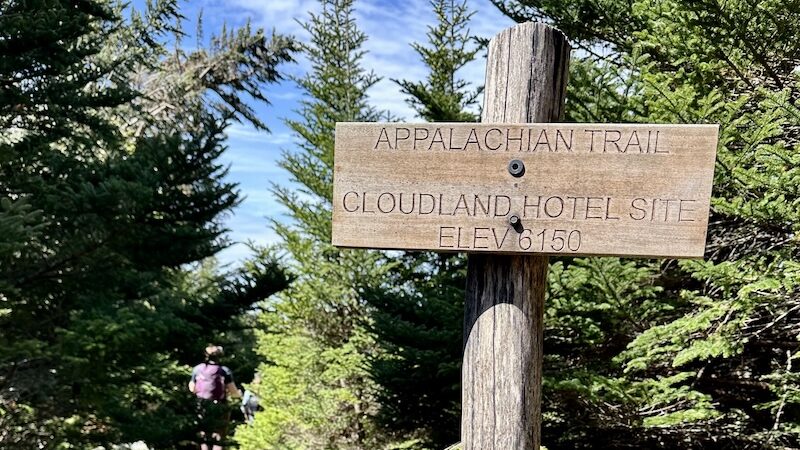
Today, little remains of the once-famous resort. The summit is now part of the Appalachian Trail, and hikers cross the same grassy balds where Victorian guests once gathered on the hotel porch to watch the sunset. A small historical marker is one of the few reminders that the hotel ever stood there.

Modern-day hikers at Roan Mountain hear nothing unusual. Yet the setting still feels much the same as it did a century ago. The high ridges remain open and windswept. Fog still rolls across the summits with little warning, and strong winds sweep across the balds with nothing to slow them down. In those conditions, sound carries easily across the mountaintops.
Perhaps the mysterious music of Roan Mountain was nothing more than wind moving across an unusual landscape. Or perhaps the mountain still holds a few secrets.
Either way, the “Ghostly Choir of Roan Moutanin” remains one of the most curious chapters in the history of the Appalachian highlands.
Sources:
The Ghostly Choir of Roan Mountain, November 20, 1955, Asheville-Citizen Times (Asheville, NC)
Ghost Choir Serenades the Roan, December 15, 1960, Asheville-Citizen Times (Asheville, NC)
Bald Mountain Mystery Still Widely Disputed, September 19, 1945, The Sentinel (Winston-Salem, NC)
‘Extraordinary Phenomenon’ at Chimney Rock, December 21, 2008, Statesville Record and Landmark (Statesville, NC)